
Risk Management
At ZOE-DEL GLOBAL LLC, risk management represents far more than defensive strategy, it constitutes the foundational infrastructure enabling confident global commerce, institutional trust, and sustainable growth. Our comprehensive risk framework integrates advanced fraud prevention protocols, strategic insurance architecture, and robust business continuity planning to protect operations, preserve reputation, and ensure uninterrupted service delivery across all market conditions.
Fraud Prevention
ZOE-DEL GLOBAL LLC operates within the high-stakes environment of global e-commerce where sophisticated fraud schemes threaten financial integrity, customer trust, and regulatory standing. Our fraud prevention infrastructure combines cutting-edge detection technologies, rigorous authentication protocols, and continuous monitoring systems to identify, prevent, and neutralize fraudulent activities before they impact operations or stakeholders. This proactive approach protects revenue streams, preserves marketplace reputation, and demonstrates the operational maturity required for institutional partnerships and banking relationships.
Transaction Monitoring
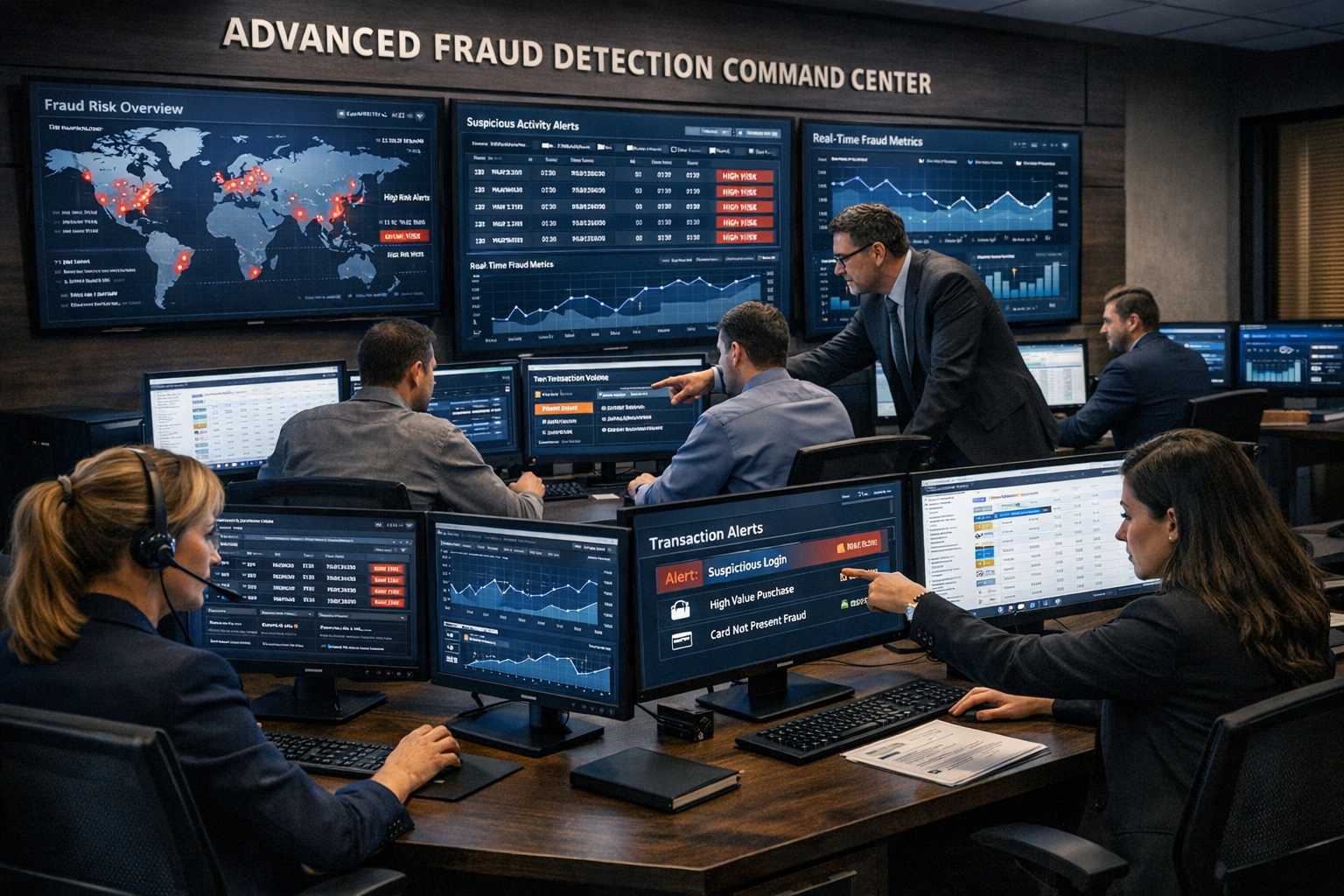
Our real-time transaction monitoring systems employ advanced machine learning algorithms and behavioral analytics to scrutinize every financial transaction flowing through ZOE-DEL’s platforms. These systems analyze multiple risk indicators including transaction velocity, geographic anomalies, device fingerprinting, billing-shipping address mismatches, and historical behavior patterns to assign risk scores and flag suspicious activities. High-risk transactions trigger immediate holds for manual review, while AI-driven pattern recognition continuously learns from emerging fraud techniques to adapt defenses dynamically. This layered approach maintains the delicate balance between fraud prevention and customer experience—minimizing false positives while maximizing threat detection accuracy.
Identity Verification
ZOE-DEL implements multi-layered identity verification protocols that authenticate users, validate payment credentials, and confirm transaction legitimacy before processing any financial commitments. Our verification infrastructure includes email validation, phone number confirmation, address verification services (AVS), card verification value (CVV) checks, and integration with global identity verification databases. For high-value transactions or accounts exhibiting elevated risk profiles, we deploy enhanced due diligence measures including document verification, biometric authentication options, and third-party identity validation services. This rigorous approach prevents account takeover fraud, synthetic identity schemes, and impersonation attacks while establishing a verified user base that supports safer marketplace ecosystems.
 style=”display:block; width:100%; height:auto; border:0;”>
PCI-DSS Compliance & Secure Payment Processing
ZOE-DEL maintains strict adherence to Payment Card Industry Data Security Standard (PCI-DSS) requirements, ensuring that all payment card data is collected, transmitted, processed, and stored in compliance with the most rigorous security protocols recognized by global financial institutions. We utilize tokenization technologies that replace sensitive card data with non-sensitive equivalents, eliminating the storage of actual payment credentials in our systems and dramatically reducing the attack surface for data breaches.
Our payment processing infrastructure leverages encrypted communication channels, secure payment gateways certified by major card networks, and regular security audits conducted by qualified security assessors (QSAs). All payment data transmission occurs over TLS-encrypted connections, and our systems undergo continuous vulnerability scanning and penetration testing to identify and remediate potential security weaknesses before they can be exploited.
Strategic advantage: PCI-DSS compliance is not merely a technical requirement—it represents a foundational credential for banking relationships, payment processor partnerships, and institutional trust. Our certified compliance status enables access to premium payment processing rates, reduces liability exposure, and demonstrates operational sophistication to financial partners and regulators.
Dispute Prevention & Resolution
Chargebacks represent a significant operational and financial risk in e-commerce, potentially resulting in revenue loss, processing fees, increased payment processor scrutiny, and eventual account termination if ratios exceed acceptable thresholds. ZOE-DEL’s chargeback management program implements comprehensive prevention strategies including clear product descriptions, transparent shipping timelines, proactive customer communication, delivery confirmation requirements, and detailed transaction documentation.
When disputes occur, our dedicated chargeback response team manages the representment process with meticulous attention to documentation requirements, deadline compliance, and compelling evidence submission. We maintain comprehensive transaction records including delivery confirmations, customer communications, product authenticity documentation, and fraud detection data to build strong cases for legitimate transactions disputed as fraudulent. Our systematic approach to chargeback management has achieved win rates significantly above industry averages while maintaining chargeback ratios well below processor thresholds.
Beyond individual dispute resolution, we conduct root cause analysis on chargeback patterns to identify systemic issues—whether operational deficiencies, product quality concerns, shipping problems, or fraud trends—and implement corrective actions that prevent future occurrences. This continuous improvement cycle transforms chargeback data into operational intelligence that drives better business processes.
Account Security & Access Controls
Protecting ZOE-DEL’s operational systems, seller accounts, and customer data from unauthorized access requires robust authentication mechanisms and granular access control policies. We implement multi-factor authentication (MFA) requirements for all administrative access, enforce strong password policies with regular rotation schedules, and maintain detailed audit logs of all system access and administrative actions. Role-based access control (RBAC) ensures that team members can only access systems and data necessary for their specific responsibilities, implementing the principle of least privilege across our operational infrastructure.
Our security architecture includes session management controls, automated logout procedures for inactive sessions, IP whitelisting for critical systems, and continuous monitoring for suspicious login patterns such as impossible travel scenarios, credential stuffing attempts, or unusual access times. Security awareness training ensures all team members understand social engineering tactics, phishing threats, and proper security hygiene practices that protect organizational credentials and sensitive data.
Third-Party Risk Assessment
ZOE-DEL’s operations depend on numerous third-party service providers—payment processors, shipping carriers, prep centers, technology vendors, and data service providers—each representing potential security and operational risks. Our vendor management framework requires security assessments for all partners handling sensitive data or critical operational functions. We evaluate vendors’ security certifications, data protection policies, incident response capabilities, and compliance with relevant regulations before establishing partnerships.
Contractual agreements with critical vendors include security requirements, data protection obligations, breach notification procedures, audit rights, and liability provisions. Regular vendor risk reviews ensure ongoing compliance with security standards and identify emerging risks that require mitigation. When vendor security incidents occur, our protocols ensure rapid response, impact assessment, customer notification where required, and implementation of additional controls to prevent recurrence.
Insurance Coverage
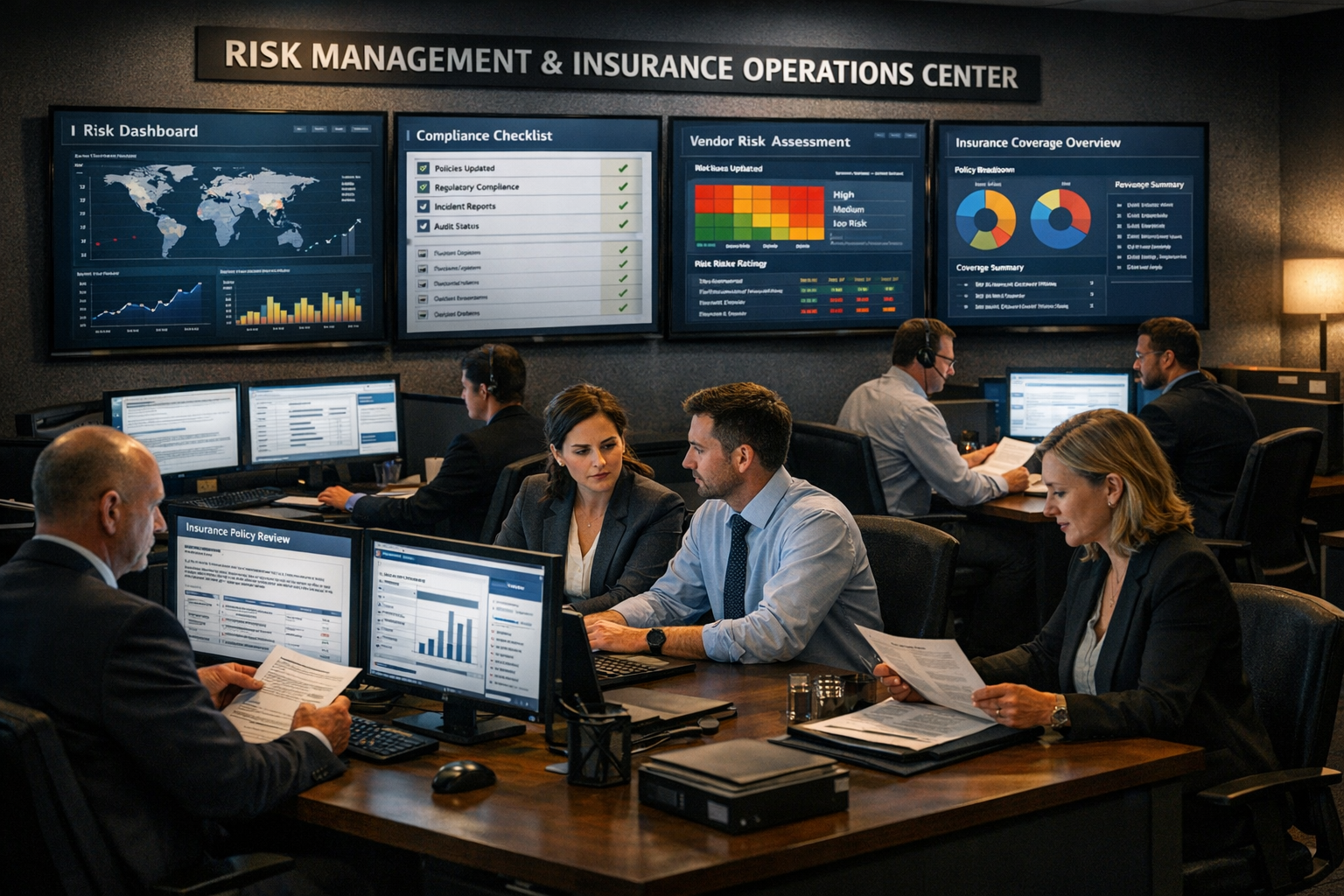
Comprehensive insurance coverage represents essential financial infrastructure that protects ZOE-DEL GLOBAL LLC against catastrophic losses, enables confident risk-taking in business development, and provides credibility signals required for institutional partnerships, banking relationships, and marketplace participation. Our insurance program has been strategically architected to address the unique risk profile of a multi-jurisdictional e-commerce operation spanning product liability, shipping operations, cyber threats, professional services, and general business risks.
Comprehensive coverage protecting against third-party bodily injury, property damage, and advertising injury claims
Protection against claims arising from products sold through ZOE-DEL platforms causing injury or damage
Coverage for data breaches, cyber attacks, business interruption, and regulatory fines related to digital security
Professional liability protection for consulting services, strategic advisory, and business formation guidance
Coverage for business property, inventory, equipment, and improvements at prep centers and operational facilities
Income protection during periods of operational disruption from covered events like natural disasters or equipment failure
Protection for goods in transit via ocean freight, air freight, and ground transportation across international routes
Defense and damages for employment-related claims including wrongful termination, discrimination, or harassment
Product Liability & Quality Assurance
Product liability represents one of the most significant risk exposures for e-commerce businesses operating across multiple product categories and international markets. ZOE-DEL’s product liability insurance provides comprehensive coverage for claims alleging that products sold through our platforms caused bodily injury, property damage, or economic harm to consumers. This coverage extends to legal defense costs, settlement payments, and judgments—protecting company assets and enabling continued operations even when facing significant product liability litigation.
Our insurance program is complemented by rigorous product vetting procedures that include supplier certification requirements, compliance documentation verification, product testing protocols for high-risk categories, and ongoing quality monitoring systems. We maintain detailed records of supplier compliance certifications, product testing results, and quality control inspections—documentation that serves both as loss prevention mechanisms and critical evidence in defending liability claims. For products in regulated categories, we ensure proper labeling, warning compliance, and adherence to applicable safety standards before marketplace listing approval.
Critical enabler: Robust product liability coverage is frequently a prerequisite for marketplace participation on major platforms, supplier partnerships with premium brands, and institutional banking relationships. Our comprehensive coverage signals operational maturity and financial responsibility to partners throughout the e-commerce ecosystem.
Cyber Liability & Data Breach Response
In an era where data breaches and cyber attacks represent existential threats to digital businesses, ZOE-DEL’s cyber liability insurance provides essential protection against the catastrophic financial, legal, and reputational consequences of security incidents. Our coverage encompasses first-party costs including forensic investigation, notification expenses, credit monitoring services for affected individuals, public relations crisis management, and business interruption losses during system restoration. Third-party coverage protects against regulatory fines from data protection authorities, legal defense costs for privacy litigation, and settlement payments to affected parties.
Beyond financial protection, our cyber insurance policy includes access to specialized incident response resources—forensic investigators, legal counsel experienced in data breach notification requirements, crisis communication specialists, and regulatory compliance advisors. These resources enable rapid, professional response to security incidents that minimizes legal exposure, preserves customer trust, and ensures compliance with complex data protection regulations spanning multiple jurisdictions including GDPR, CCPA, and emerging privacy frameworks.
The underwriting process for cyber insurance requires demonstration of baseline security controls—a requirement that drives continuous improvement in our cybersecurity posture. Annual policy renewals include security assessments that incentivize ongoing investment in protective technologies, employee training, and security best practices.
Cargo Insurance & Supply Chain Protection
ZOE-DEL’s global supply chain operations involve continuous movement of inventory across international borders via ocean freight, air cargo, and ground transportation—each leg presenting distinct risks of loss, damage, or theft. Our comprehensive cargo insurance program protects inventory value during transit from supplier facilities through international shipping, customs clearance, domestic distribution, and final delivery to prep centers or customers. This “warehouse-to-warehouse” coverage eliminates gaps that could leave inventory unprotected during complex multi-modal transportation journeys.
Coverage extends beyond simple physical loss to include general average contributions (costs imposed when cargo must be jettisoned to save a vessel), salvage charges, and sue and labor expenses incurred to minimize losses during emergency situations. For high-value shipments or sensitive products, we implement enhanced security measures including GPS tracking, tamper-evident seals, and secure routing protocols that both reduce risk and satisfy insurance underwriting requirements for premium coverage.
Claims management procedures ensure rapid filing, comprehensive documentation, and aggressive pursuit of recoveries from carriers, shipping lines, or other responsible parties. Our systematic approach to cargo claims has achieved settlement rates and recovery timelines significantly better than industry averages, minimizing financial impact from transportation incidents.
Errors & Omissions Coverage for Advisory Services
ZOE-DEL’s strategic advisory services, business formation consulting, and operational guidance create potential professional liability exposures that require specialized Errors & Omissions (E&O) insurance protection. This coverage defends against claims alleging that professional advice, strategic recommendations, or business consulting services resulted in financial harm to clients—whether through negligent errors, omissions of critical information, or failure to meet professional standards of care.
Our E&O policy provides legal defense regardless of claim merit—a crucial protection given that defending baseless professional liability suits can consume substantial resources even when claims ultimately prove unfounded. Coverage includes settlement authority, allowing resolution of disputes when settlement represents the most economical outcome even for defensible claims. Policy limits are calibrated to the scale of client engagements and potential exposure magnitudes, ensuring adequate protection without excessive premium costs.
E&O coverage also serves as a powerful credential when engaging with sophisticated clients, institutional partners, and international counterparties who expect professional service providers to carry appropriate liability protection. The insurance requirement drives implementation of professional best practices including engagement letters, scope documentation, limitation of liability clauses, and professional development programs that reduce claim frequency while demonstrating commitment to professional standards.
Business Interruption & Loss of Income Protection
Business interruption insurance provides critical financial protection when covered events—such as fire, natural disasters, equipment failure, or supplier disruptions—force temporary cessation or reduction of operations. This coverage replaces lost income during downtime periods, covers continuing expenses like payroll and rent that persist despite revenue interruption, and provides resources for temporary relocation, expedited equipment replacement, or other measures needed to resume operations rapidly.
For ZOE-DEL’s e-commerce operations, business interruption scenarios could include prep center closures due to natural disasters, cyber attacks rendering technology systems inoperable, supplier facility disruptions preventing inventory replenishment, or marketplace account suspensions from platform policy violations. Our comprehensive coverage addresses both direct property damage scenarios and contingent business interruption from supplier or customer disruptions beyond our direct control.
Financial resilience: Business interruption coverage provides the financial runway needed to maintain operations, preserve employment, and sustain stakeholder relationships during crisis periods—transforming potentially catastrophic events into manageable disruptions from which the business can fully recover.
Business Continuity
Business continuity planning at ZOE-DEL GLOBAL LLC transcends reactive disaster recovery to encompass proactive resilience engineering—systematic preparation for operational disruptions ranging from natural disasters and cyber attacks to supplier failures, marketplace suspensions, and geopolitical events. Our comprehensive business continuity framework ensures ZOE-DEL can maintain critical operations during adverse events, recover rapidly from disruptions, and emerge with minimal stakeholder impact and preserved competitive position.
Operational Redundancy
ZOE-DEL’s operational architecture incorporates deliberate redundancy across critical business functions to prevent single points of failure from causing system-wide disruptions. Our multi-marketplace presence across Amazon, Shopify, Etsy, and proprietary storefronts ensures that platform-specific issues, account suspensions, or policy changes affecting one channel do not eliminate revenue streams entirely. Geographic diversification of prep center partnerships means that regional disruptions—hurricanes affecting Florida facilities, wildfires impacting West Coast operations—don’t halt fulfillment capabilities across all markets. Multiple supplier relationships for key product categories provide continuity when individual vendors experience production problems, quality failures, or supply disruptions. This layered redundancy enables graceful degradation rather than catastrophic failure when individual system components experience problems.
Rapid Response Protocols
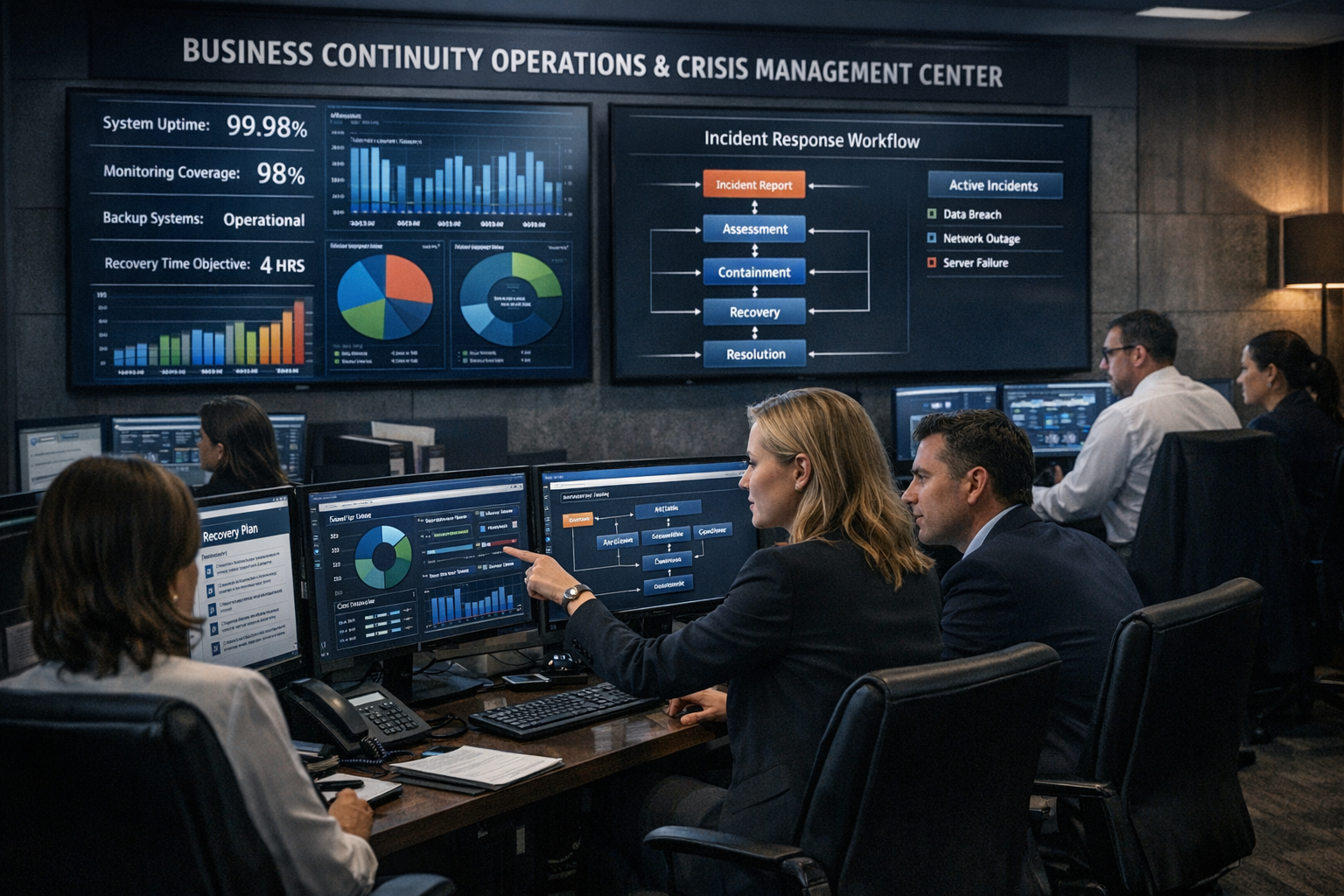
Effective business continuity depends on rapid detection, assessment, and response to disruptive events. ZOE-DEL maintains documented incident response procedures that clearly define notification chains, decision authorities, communication protocols, and action steps for various disruption scenarios. Our 24/7 monitoring systems track critical operational metrics—order processing rates, inventory levels, shipping performance, marketplace health scores, payment processing status—and trigger immediate alerts when metrics fall outside acceptable parameters. Pre-established relationships with backup suppliers, alternate prep centers, and emergency service providers enable rapid activation of contingency plans without time-consuming negotiation or onboarding delays. Regular crisis simulation exercises test team responsiveness, identify procedural gaps, and build institutional muscle memory for high-pressure decision-making under adverse conditions.
Data Backup & Disaster Recovery
ZOE-DEL’s information assets—customer data, transaction records, inventory systems, supplier databases, financial records, and operational documentation—represent irreplaceable business value that must be protected against loss from hardware failures, cyber attacks, natural disasters, or human error. Our comprehensive data backup strategy implements automated daily backups of all critical systems with retention periods calibrated to regulatory requirements, operational needs, and recovery point objectives (RPO) for different data categories.
Backup data is encrypted both in transit and at rest, stored in geographically distributed locations to protect against regional disasters, and tested regularly through restoration drills that verify data integrity and recovery procedures. Our disaster recovery protocols define recovery time objectives (RTO) for different system tiers—critical e-commerce systems requiring sub-4-hour recovery, important but non-critical systems with 24-hour targets, and archival data with longer acceptable restoration timelines. This tiered approach optimizes recovery resource allocation while ensuring mission-critical capabilities can be restored rapidly.
Beyond technology: Our disaster recovery procedures include documented recovery sequences, role assignments, communication templates, and decision frameworks that enable coordinated response even when key personnel are unavailable or facilities are inaccessible. Cloud-based infrastructure provides inherent resilience and geographic redundancy that traditional on-premises data centers cannot match economically.
Supply Chain Resilience Planning
Supply chain disruptions—whether from supplier bankruptcies, factory closures, transportation interruptions, natural disasters, or geopolitical events—can halt product availability and revenue generation if adequate contingency planning is absent. ZOE-DEL’s supply chain continuity strategy begins with supplier diversification: maintaining qualified alternate sources for critical product categories, cultivating relationships across different geographic regions, and avoiding excessive concentration with any single vendor that could create catastrophic dependency.
We maintain strategic inventory buffers for high-velocity SKUs and products with long lead times or single-source dependencies—accepting modestly higher carrying costs to prevent stockouts during supply disruptions. Supplier financial health monitoring provides early warning of potential failures, enabling proactive sourcing of alternatives before disruptions materialize. Contractual provisions with key suppliers include business continuity requirements, backup facility designations, and notification obligations for events that could impact supply capacity.
Our supply chain visibility tools track supplier performance, monitor lead time trends, and flag delivery delays that could signal emerging problems. This intelligence enables preemptive action—securing alternate capacity, adjusting marketing to manage demand, or communicating proactively with customers about potential delays—that transforms potential crises into managed situations with minimal customer impact.
Crisis Communication Framework
Effective crisis management requires not only operational response but also strategic communication that preserves stakeholder trust, manages reputation, and maintains business relationships during adverse events. ZOE-DEL’s crisis communication framework defines notification protocols for different stakeholder groups—customers, suppliers, partners, financial institutions, regulatory authorities—with message templates tailored to each audience’s information needs and appropriate disclosure requirements.
Our communication strategy emphasizes transparency about situation status, clear explanation of impacts and mitigation measures, realistic timelines for resolution, and regular updates as situations evolve. For customer-facing disruptions, we implement proactive notification before customers experience service degradation, provide alternative fulfillment options when available, and offer appropriate remedies when service commitments cannot be met. This approach converts potentially relationship-damaging incidents into trust-building demonstrations of accountability and customer commitment.
Internal communication protocols ensure all team members have consistent, accurate information about crisis situations, their assigned responsibilities, and appropriate customer messaging. This alignment prevents conflicting communications, ensures professional customer interactions, and maintains organizational cohesion during high-stress situations.
Post-Incident Analysis & Learning
Every operational disruption—whether minor incident or major crisis—provides valuable learning opportunities that can strengthen future resilience. ZOE-DEL conducts systematic post-incident reviews following significant disruptions, assembling cross-functional teams to document event timelines, analyze root causes, evaluate response effectiveness, and identify improvement opportunities. These reviews examine both technical factors (system failures, process breakdowns) and organizational dynamics (decision quality, communication effectiveness, team coordination) to develop comprehensive understanding of incident drivers.
Lessons learned translate into concrete action items: procedure updates, technology enhancements, training programs, policy changes, or resource investments that address identified deficiencies. We track implementation of corrective actions through completion and conduct follow-up assessments to verify effectiveness. This systematic learning cycle transforms disruptions into catalysts for organizational improvement rather than merely resolving immediate problems and hoping similar issues don’t recur.
Cultural foundation: Our approach to incident analysis emphasizes learning over blame, encouraging transparent reporting of near-misses and minor failures that could signal systemic vulnerabilities before they manifest as major crises. This safety culture enables early intervention that prevents small problems from escalating into catastrophic events.
ZOE-DEL GLOBAL LLC’s comprehensive risk management framework—integrating advanced fraud prevention, strategic insurance protection, and robust business continuity planning—provides the operational foundation for confident global commerce, institutional partnerships, and sustainable growth. Our proactive approach to risk transforms potential vulnerabilities into competitive strengths, demonstrating the operational maturity and financial responsibility that distinguish industry leaders from mere participants.